

Stiff Coreopsis
The highly popular Stiff Coreopsis, Coreopsis palmata, sports bright yellow flowers for 3 - 4 weeks in the heat of mid-summer. The underground rhizomes spread to form a dense mat, making it excellent for stabilizing dry, sunny slopes and even sand …
| Soil Type | Loam, Sand |
|---|---|
| Soil Moisture | Dry, Medium |
| Sun Exposure | Full Sun |
| Height | 2' - 3' |
| Bloom Color | Yellow |
| Bloom Time | June, July, Aug |
| Spacing | 1' |
| Hardiness Zone | 3, 4, 5, 6, 7, 8 |
| Root Type | Rhizome |
| Benefits | Butterflies, Pollinators, Host Plant, Deer Resistant |
Details
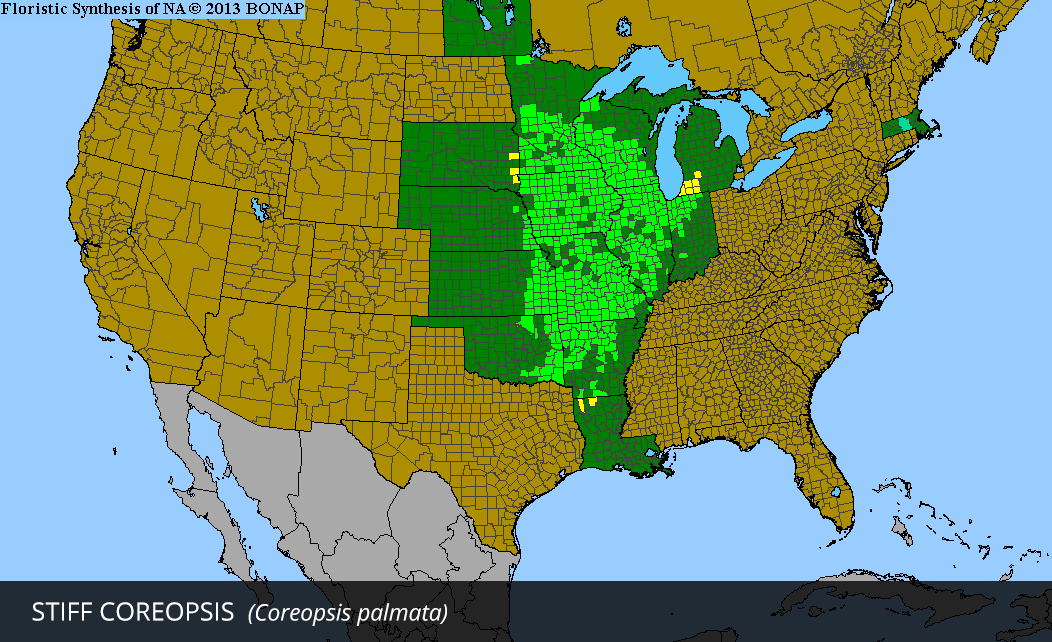
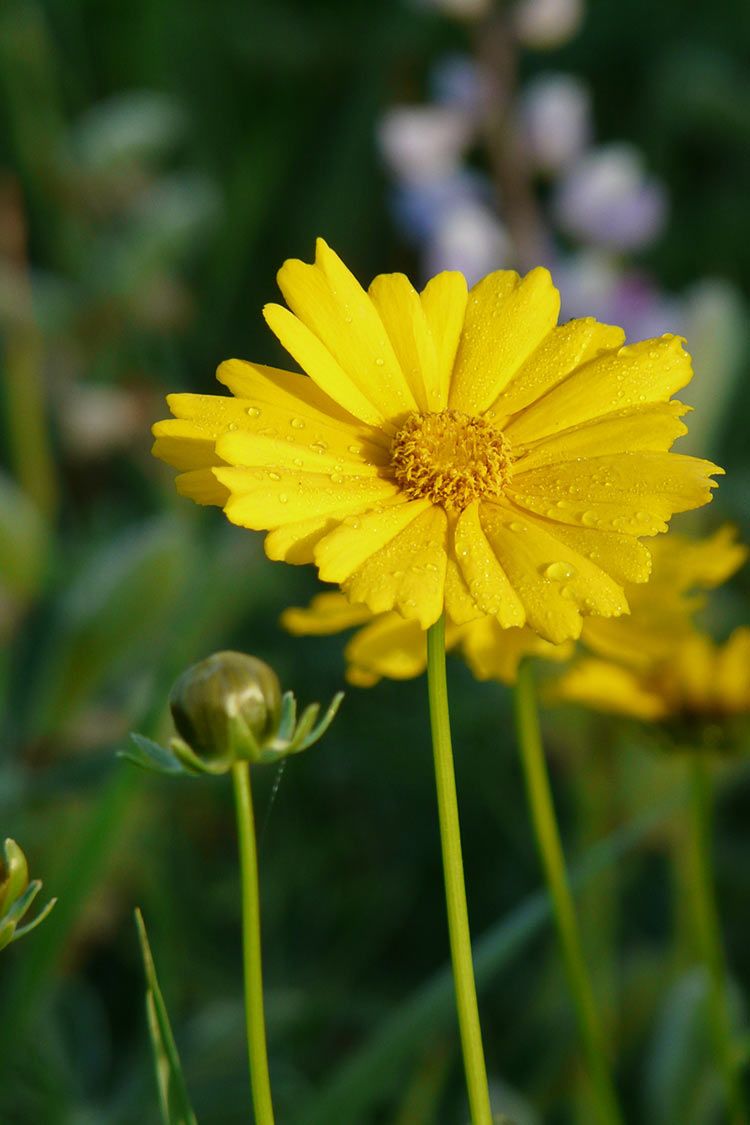
The highly popular Stiff Coreopsis sports bright yellow flowers for 3 – 4 weeks in the heat of mid-summer. Each daisy-like flower, about 1–2 inches across, stands out against the plant’s deeply textured, palmate leaves. After blooming, the seed heads persist into fall, providing late-season interest even after frost.
Deer resistant, it tolerates poor soils and drought exceptionally well. Coreopsis palmata is native to the central and eastern prairies of North America and grows naturally in prairies, open woods, and along roadsides – places with good drainage and plenty of light.
In the Garden
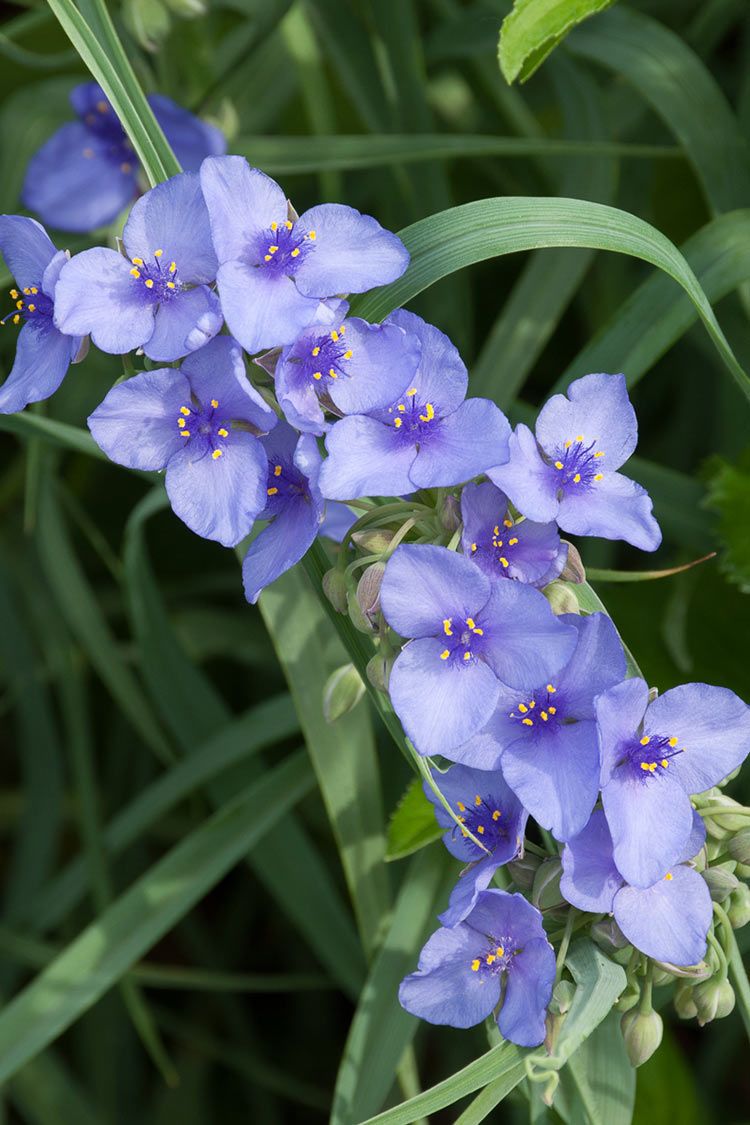
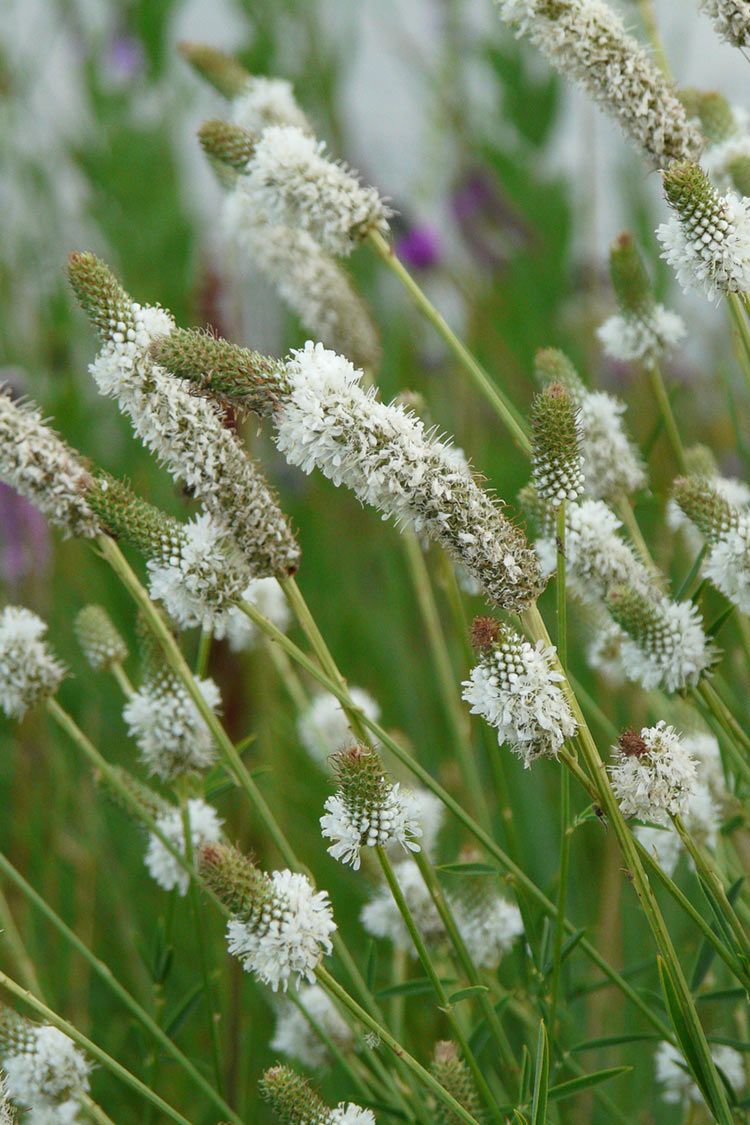
The upright clumping habit is easy to manage and provides a natural, informal look that uplifts any planting design in full sun. In the Sunny border, pollinator planting, or naturalized setting it mixes beautifully with other mid-height natives such as Blazing Star, Butterfly Milkweed, and Little Bluestem.
The abundant flowers are a reliable summer food source for native bees, butterflies, and other pollinators. As many as 22 native bee species rely on plants in the Coreopsis genus. Songbirds—especially goldfinches—feed on the seeds later in the season. Several small species of moths, including the Wavy-Lined Emerald, use this as a host plant.
Growth Habit & Spreading
Stiff Coreopsis spreads slowly by short rhizomes, forming colonies over time without becoming aggressive. The underground rhizomes form a dense mat, making it excellent for stabilizing dry, sunny slopes and even sand dunes. It can reseed modestly in favorable conditions but is not an aggressive seeder. The slow spread makes it useful for filling in spaces without overtaking nearby plants. Very little care is needed for this agreeable perennial. Avoid overly rich or wet soils, which can cause floppy growth. Deadheading will prolong blooming, but you’ll want to let the later blooms mature into seed heads for wildlife and winter interest.
Conservation
It’s not considered rare, but Stiff Coreopsis is much less common than it once was due to loss of native prairie habitat.