

Plantain Leaved Pussytoes
Low growing and mat forming, Plantain Leaved Pussytoes (Antennaria plantaginifolia) is a distinctive native ground cover with light green basal leaves covered in soft silvery hairs on the underside. The charming fuzzy blooms look like the soft pads of a cat paw …
| Soil Type | Gravel, Loam, Sand |
|---|---|
| Soil Moisture | Dry, Medium |
| Sun Exposure | Full Sun, Partial |
| Height | 1' |
| Bloom Color | White |
| Bloom Time | Apr, May, June |
| Spacing | 1' - 18" |
| Hardiness Zone | 4, 5, 6, 7, 8 |
| Root Type | Rhizome |
| Benefits | Pollinators, Host Plant, Deer Resistant, Black Walnut Tolerant |
Details
Low growing and mat forming, Plantain Leaved Pussytoes (Antennaria plantaginifolia) is a distinctive native ground cover with light green basal leaves covered in soft silvery hairs on the underside. The charming fuzzy blooms look like the soft pads of a cat paw. The white-to-pinkish flowers bloom on slender stems that rise above the leaves in spring. If you’re familiar with its close relative Antennaria neglecta, you'll find A.plantaginifolia a bit larger with wider leaves and slightly taller flower stalks. The easiest way to tell them apart is by looking at the leaves: A. plantaginifolia has broader leaves with three to five noticeable veins, while A. neglecta has narrower leaves with just one or two prominent veins.
Where it Thrives
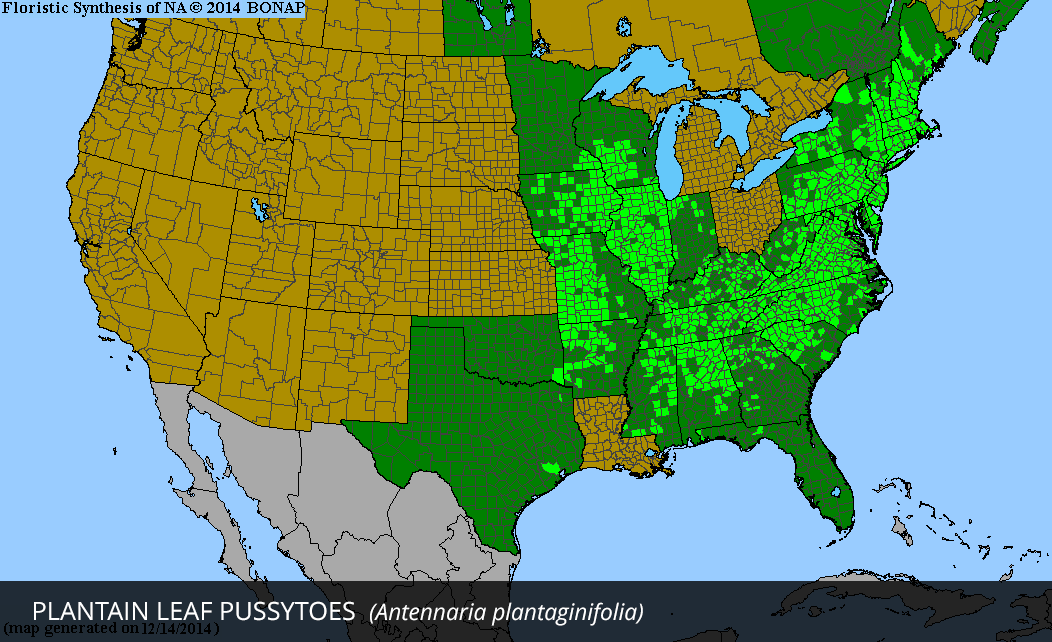
Plantain Leaved Pussytoes grows naturally in the eastern and central parts of the U.S., in dry woodlands, savannas, and rocky areas or outcroppings. Its fuzzy leaves are an adaptation that helps it hold onto water and thrive in drier conditions. For best results in the garden, plant it in full sun or light shade. At least six hours of sun is best. A well-drained soil is required as Pussytoes prefers to be on the drier side and will struggle in overly fertile, humus-rich, or poorly drained soil.
Great Ways to Use It in Your Garden
Once established, Plantain Leaved Pussytoes is very drought-tolerant, low-maintenance ground cover. It’s a great candidate for rock gardens, and xeric sites with sandy or gravelly soils, as well. Use it as a border or edging plant to soften the edges of pathways and garden beds. It can also be employed as a base layer within a prairie garden on well-drained sites. Pussytoes does have some allelopathic tendencies and can be naturally suppressive of less vigorous plants and young seedlings.
Ecological Benefits
An important host plant for the American Lady butterfly, its spring blooms are a magnet for early-season pollinators such as small native bees and flies. This plant is generally avoided by deer and rabbits. Bobwhite quail are known to feed on its seeds.
Growth and Care
Plantain Leaved Pussytoes spreads gradually by sending out above-ground runners called stolons, forming dense patches or mats that typically reach about 12 to 18 inches wide per plant. It can reseed, but spread by self-seeding is unlikely unless conditions are ideal. One of the most important things to remember with Pussytoes is that it’s better to underwater than overwater. Take care not to over water it during establishment. If leaves or debris gather around the plant, gently clear them away in late fall or early spring. This prevents smothering and rotting, which can happen if moisture gets trapped. Mature plants can be divided to create more plants, and occasional thinning helps keep them looking their best. When planted in the right conditions, Pussytoes is generally free of pests and diseases. However, poor drainage and very fertile soils can lead to root rot and are usually detrimental.
Other Common Names
Other common names include Woman's Tobacco, Plantain Leaf Everlasting, and Mouse Ear.