

Spicebush
Spicebush, also called Northern Spicebush, is a native shrub about 6 – 12 feet tall and wide with a rounded, multi-stemmed form. In early spring small clusters of fragrant yellow flowers line the branches before the leaves emerge. As a member of the Laurel family, the leaves, twigs and bark release a spicy, citrus-like fragrance when crushed …
| Soil Type | Loam |
|---|---|
| Soil Moisture | Medium, Moist, Wet |
| Sun Exposure | Partial, Shade |
| Height | 6' – 12' |
| Bloom Color | Yellow |
| Bloom Time | Apr, May |
| Spacing | 6' - 12' |
| Hardiness Zone | 4, 5, 6, 7, 8, 9 |
| Root Type | Fibrous |
| Benefits | Birds, Pollinators, Host Plant, Deer Resistant |
Details
Spicebush, also called Northern Spicebush, is a native shrub about 6 – 12 feet tall and wide with a rounded, multi-stemmed form. In early spring small clusters of fragrant yellow flowers line the branches before the leaves emerge. As a member of the Laurel family, the leaves, twigs and bark release a spicy, citrus-like fragrance when crushed. In fall, the foliage turns a clear golden yellow.
Growth and Care
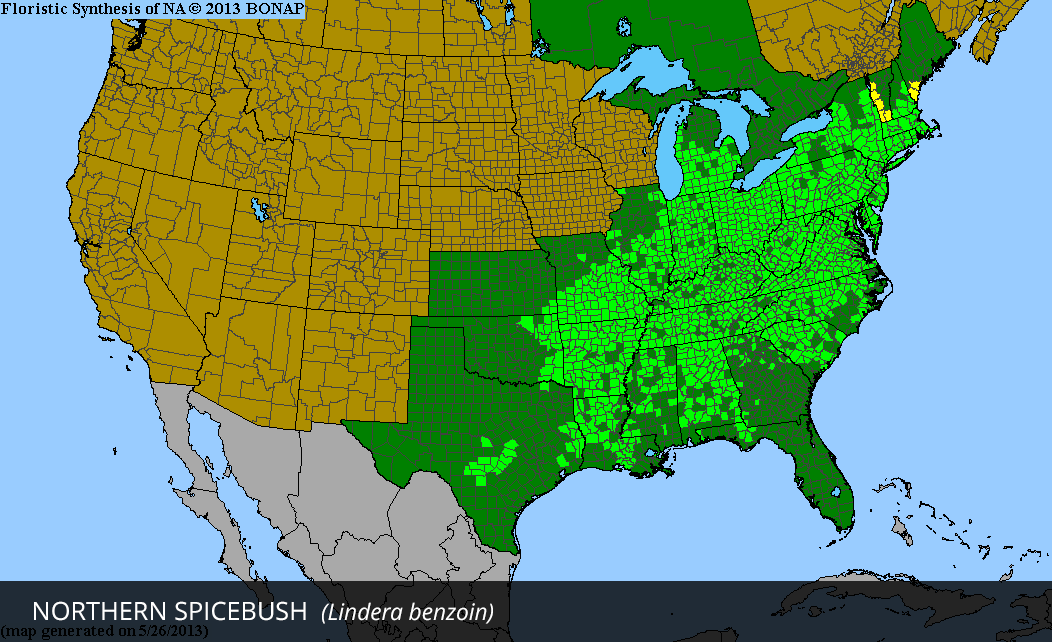
Moist woodlands, forest understories, ravines and floodplains of eastern North American are the native domain of Spicebush. For its best performance, Spicebush likes a consistently moist setting and partial shade. Full sun is tolerated, but adequate and consistent soil moisture is critical in a sunny location. Once established it requires relatively little maintenance in a range of soil types, including clay.
Newly planted shrubs benefit from consistent watering while their roots become established. Avoid letting the soil dry out for extended periods, especially in sunny locations. Pruning is usually unnecessary beyond removing damaged branches or controlling the plant's slow spread through root suckers.
This shrub is an excellent choice for woodland gardens, native shrub borders, or any moist setting in the landscape. Allow approximately 6 – 12 feet of space for mature plants, depending on the desired density of the planting.
Wildlife Interactions
Early flowering, Spicebush provide pollen and nectar for small native bees, flies, and other insects when few other shrubs are blooming. It's also an important host plant for the Spicebush Swallowtail butterfly, whose caterpillars feed on its leaves. Later in the summer female plants produce red fruits that are consumed by songbirds.
History & Conservation
Also known as Wild Allspice, Spicebush has a long history of traditional use. Its aromatic fruits, leaves, and twigs have been used historically for seasoning and in teas. This species is generally considered secure in its native range, although local populations and suitable woodland habitats face pressure from increasing habitat loss.