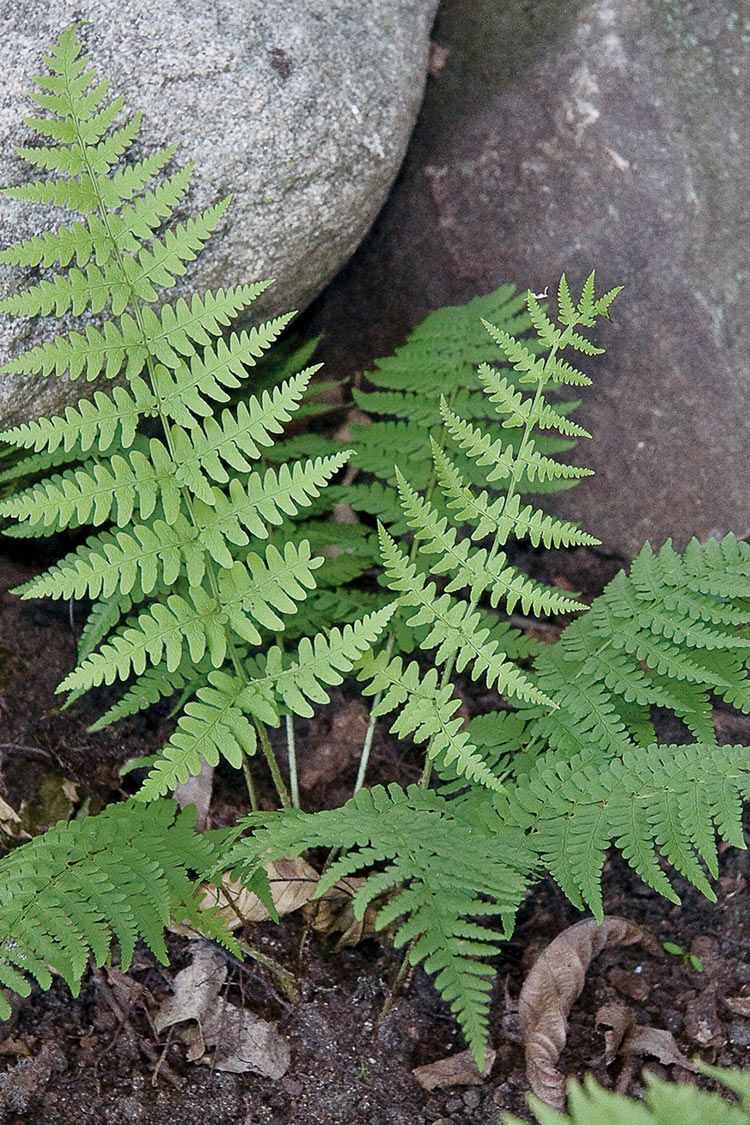
Hayscented Fern creeps by rhizomes to form a solid ground cover that few weeds can penetrate. Native to the northeastern U.S. and Appalachian Mountains, this fern is excellent for naturalizing along woodland edges that receive partial sun. …
Hayscented Fern creeps by rhizomes to form a solid ground cover that few weeds can penetrate. Native to the northeastern U.S. and Appalachian Mountains, this fern is excellent for naturalizing along woodland edges that receive partial sun. Lovely light green fronds stay low, seldom exceeding 18 inches in height. Hayscented Fern does best in well-drained soils, and thrives in well-drained rocky and sandy soils. Like most ferns, it is rabbit and deer resistant.
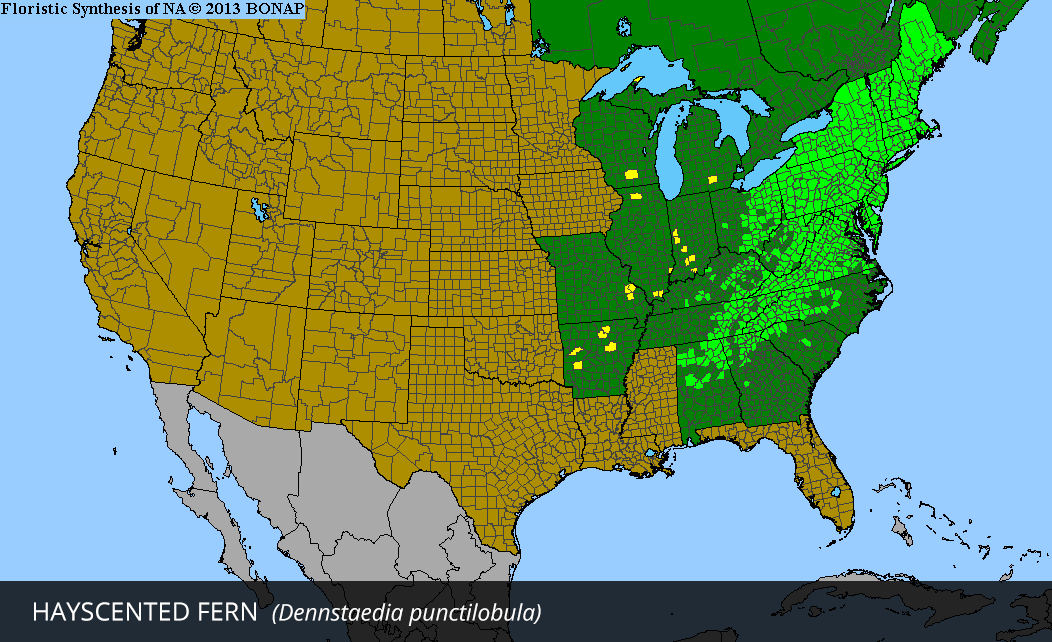
Native plants can be grown outside of their native range in the appropriate growing conditions. This map shows the native range, as well as the introduced range, of this species.
Plant Shipping Rates: for plant orders up to $50 the shipping amount is $9.95. For plant orders from $50.01 and over, the shipping rate is 20% of the total plant cost.
Spring plant-shipping begins March 22, 2027. The last day to order plants this spring is projected to be May 14, 2027.
During checkout, you will choose a shipping week for your plant delivery, from the dates that are available. The week that you choose will be included in your order confirmation email. When your plants ship you will receive an email that includes your tracking information.
We ship plant orders Monday thru Wednesday from our nursery in central Wisconsin. The farther your plants need to travel, the earlier in the week they will ship. The goal is to deliver all plants by the end of the week.
Planting ferns in the spring is most common, but they can be planted at any time during the growing season, and that includes fall planting. If planted in spring, make sure to keep them consistently moist, but not over-watered, during their first season. A site that is protected from the wind also helps ferns establish quickly. If planted in the fall they should be installed in the ground at least 6 weeks before the ground freezes. This is important because it gives the newly planted ferns enough time to root-in before the ground freezes. Fall planted ferns may die-back quickly as they head into a dormant stage, but that does not mean they are dead. In the fall, new transplants typically take less water than in the spring, but still should have the soil moisture checked regularly to make sure it is not drying out completely. In fall you might want to use a marker/ or tag, in the soil to identify the place where you planted them.