

Bradbury's Monarda
Bradbury's Monarda is shorter and more compact than its classic prairie relative, Bergamot. The attractive mounded foliage is only one foot high, with the stems and flowers reaching above, at 18 inches. Unique and charming, the late spring blooms are show-stealers …
| Soil Type | Clay, Loam, Sand |
|---|---|
| Soil Moisture | Medium |
| Sun Exposure | Full Sun, Partial |
| Height | 1' – 2' |
| Bloom Color | Lavender, Pink |
| Bloom Time | Apr, May, June |
| Spacing | 1' - 18" |
| Hardiness Zone | 5, 6, 7, 8 |
| Root Type | Fibrous |
| Benefits | Butterflies, Pollinators, Host Plant, Deer Resistant, Black Walnut Tolerant |
Details
Bradbury's Monarda is shorter and more compact than its classic prairie relative, Bergamot (Monara fistulosa). The attractive mounded foliage is only one foot high, with the stems and flowers up to 18 inches high. A late spring bloomer, the flowers rise and shine above the dense mound of deep green leaves. Pale lavender to light pink petals are delicately flecked with purple. The leaves exude a pleasant, minty aroma when crushed, and turn a rich burgundy color in fall. After flowering, the spent blooms form prominent attractive seed heads and offer good winter interest.
Where it Thrives
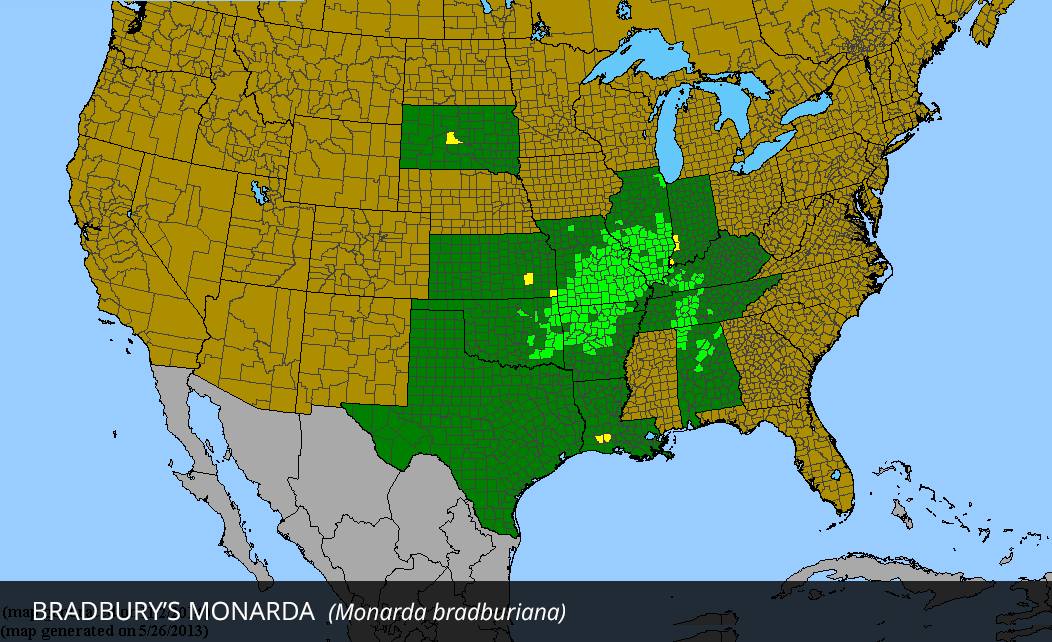
Also known as Eastern Beebalm, Bradbury’s is native to the central and eastern United States. It thrives in a range of habitats from open woodlands and savannas to glades and prairies. This adaptable species tolerates a range of soil types including sand, loam and clay, as long as the site is not too dry and not too wet. It prefers full sun or partial shade, and well-drained soil. Clay soil is OK, as long as the soil has adequate drainage. Consistently damp settings are not well tolerated in any case.
Ways to Use It in Your Landscape
Its compact size, abundant flowers, and easy maintenance make Bradbury's Monarda an agreeable addition in just about any garden setting, even a small perennial bed. It also works well as a ground cover when spaced appropriately. Plant it 12–18 inches apart for a solid cover within a couple of years. Among a community of native plants, either a low-growing meadow or a lightly shaded underplanting would be ideal. As with all Monarda’s, pollinators will love it: plant it in groups of five or six for a nice burst of early season color in the pollinator garden.
Support for Wildlife
Bradbury's Monarda has nectar-rich flowers that attract a variety of pollinators such as bumblebees, miner bees, and butterflies. It’s also an important host plant for the caterpillars of the Raspberry Pyrausta Moth (Pyrausta acrionalis). The seeds are a food source for fall and winter birds. As with other Monarda's, it is both deer and rabbit resistant.
Growth and Spread
This plant has a moderate growth rate and forms neat clumps. The fibrous root bunch spreads non-aggressively from short rhizomes, spreading slowly to form a larger patch over time. It is not an aggressive spreader by root, but it will re-seed abundantly in favorable conditions.
Care and Maintenance
Bradbury's Monarda is remarkably low maintenance and drought tolerant, once established. It is resistant to the powdery mildew that affects other monardas, however, in humid climates good air circulation may be needed to fully prevent it. Deadheading spent flowers will encourage a second, smaller flush of blooms.