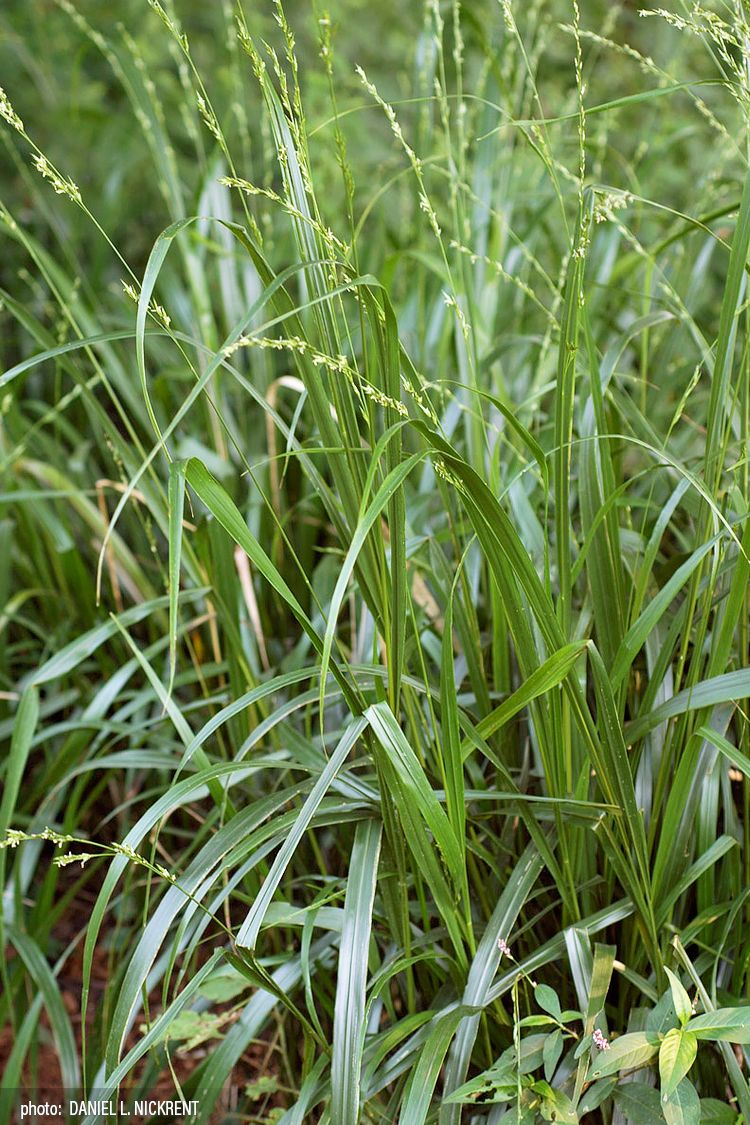
Bottlebrush Grass offers exquisite seed heads in the shade garden. A cool season grass, Elymus hystrix grows actively during the spring and fall when soil temperatures are cool. It provides fabulous texture and interest in wooded areas and is perfect …
Bottlebrush Grass offers exquisite seed heads in the shade garden. A cool season grass, Elymus hystrix grows actively during the spring and fall when soil temperatures are cool. It provides fabulous texture and interest in wooded areas and is perfect for planting under oaks and other deciduous trees where some light is able to penetrate to the forest floor. Bottlebrush Grass is included in our Woodland Edge Seed Mix.
This native grass is a host plant for the Northern Pearly Eye (Enodia anthedon).
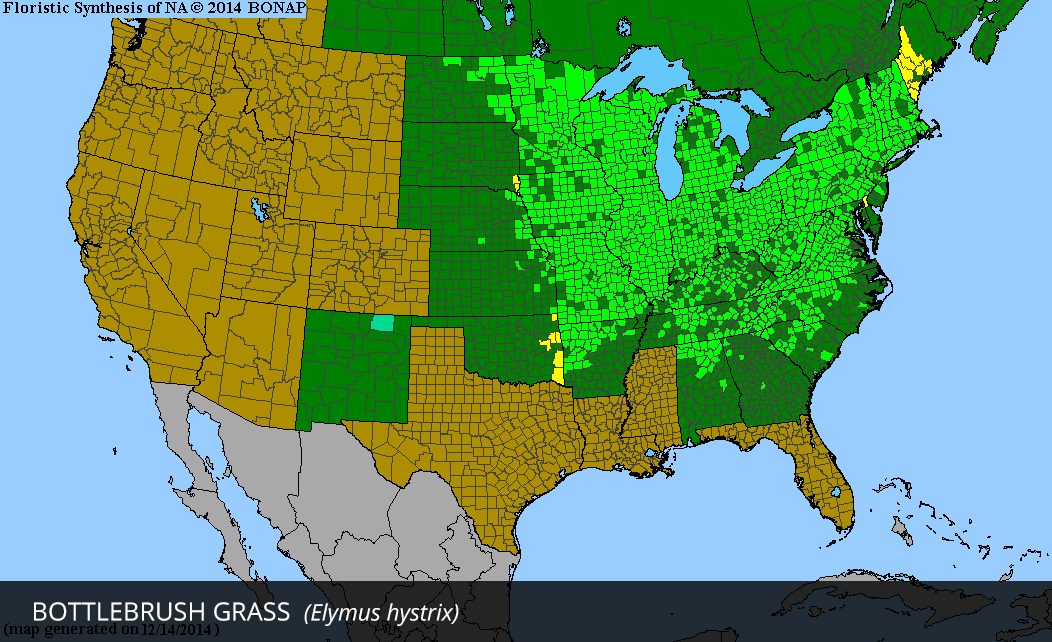
Native plants can be grown outside of their native range in the appropriate growing conditions. This map shows the native range, as well as the introduced range, of this species.
Plant Shipping Rates: for plant orders up to $50 the shipping amount is $9.95. For plant orders from $50.01 and over, the shipping rate is 20% of the total plant cost.
Spring plant-shipping begins March 22, 2027. The last day to order plants this spring is projected to be May 14, 2027.
During checkout, you will choose a shipping week for your plant delivery, from the dates that are available. The week that you choose will be included in your order confirmation email. When your plants ship you will receive an email that includes your tracking information.
We ship plant orders Monday thru Wednesday from our nursery in central Wisconsin. The farther your plants need to travel, the earlier in the week they will ship. The goal is to deliver all plants by the end of the week.
Bottlebrush Grass prefers partial sunlight to light shade, moist to slightly dry conditions, and loamy soil that contains decaying organic matter. It will grow in soils with some clay content, but heavy clay is not recommended. The soil needs to be well-drained.
Is it invasive in a smaller garden?
Bottlebrush Grass is easy to manage in the garden, and is not an aggressive spreader. Self-seeding will occur and create new plants in favorable conditions. If you are getting too many seedlings simply cut the seed heads off in the fall, just before the seeds drop.