

Solomon's Seal
Polygonatum biflorum
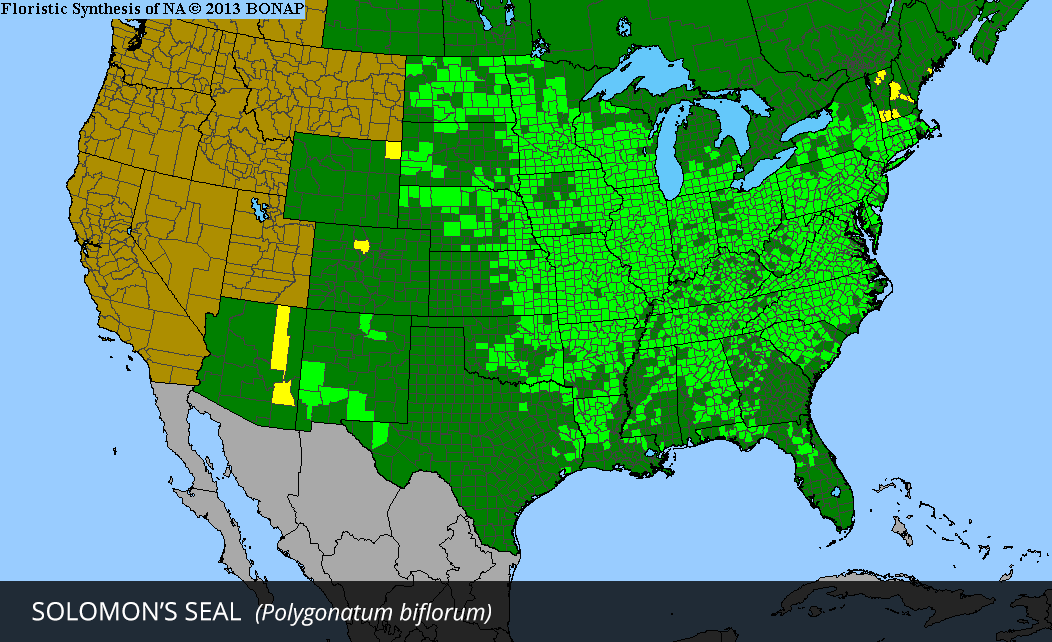
Solomon's Seal (Polygonatum biflorum) is prized for its graceful arching stems with dangling, cream-colored flowers in spring, followed by deep blue berries in late summer and fall. The tall arching stems add unique structural interest in the shade garden …
Plants
Bare Root
Sold Out
1-4
$10.99
ea.
5-10
$9.99
ea.
11+
$8.99
ea.
Availability:
Sold out
SKU
37210-BR
| Soil Type | Clay, Loam, Sand |
|---|---|
| Soil Moisture | Medium, Moist |
| Sun Exposure | Partial, Shade |
| Height | 1' - 3' |
| Bloom Color | White, Cream |
| Bloom Time | May, June |
| Spacing | 1' - 2' |
| Hardiness Zone | 3, 4, 5, 6, 7, 8, 9 |
| Root Type | Rhizome |
| Benefits | Birds, Pollinators, Black Walnut Tolerant |
Details
Solomon's Seal (Polygonatum biflorum) is prized for its graceful arching stems with dangling, cream-colored flowers in spring, followed by deep blue berries in late summer and fall. The tall arching stems add unique structural interest in the shade garden and look great all summer long. The leaves turn a bright Gold in autumn. Solomon's Seal plants combine well with ferns.
You might also like...